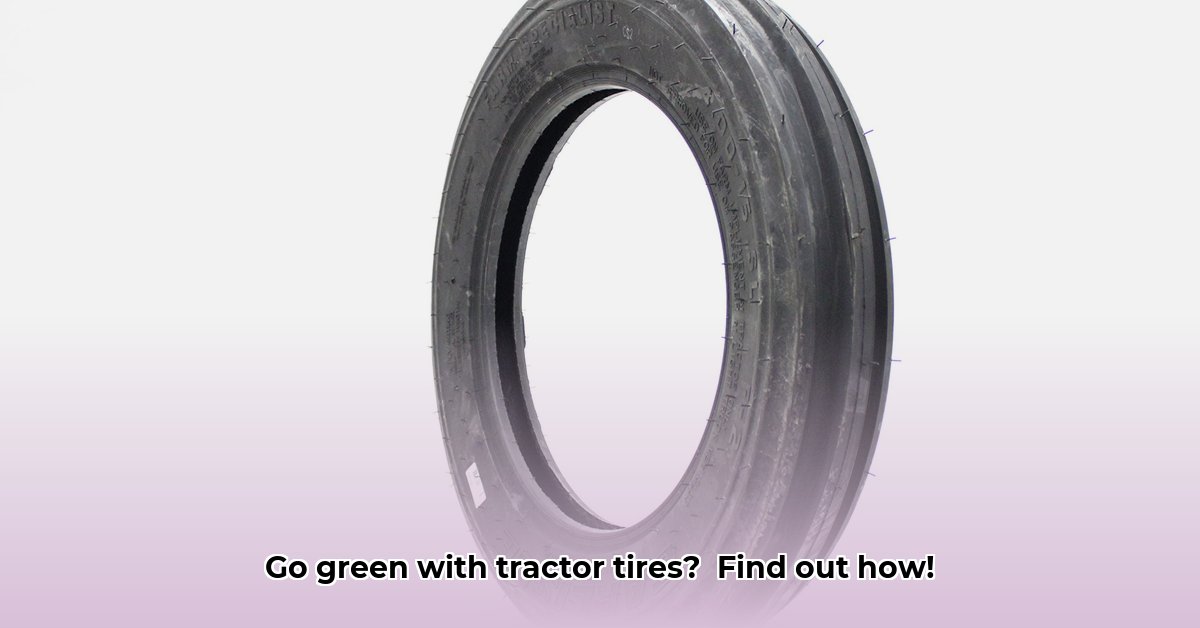
600-16 Tractor Tires: A Greener Path for Farming
The 600-16 tractor tire, a ubiquitous workhorse in agriculture, presents a significant opportunity for enhancing sustainability. This report analyzes the environmental impact of these tires across their lifecycle, from manufacturing to disposal, highlighting key risks and offering actionable recommendations for farmers, manufacturers, regulatory bodies, and online marketplaces. We'll explore how optimizing tire selection and management practices can contribute to more efficient and eco-conscious farming. For more in-depth information, see our dedicated page on 600-16 tractor tires.
The 600-16 Tractor Tire Market: Current Trends and Data Gaps
The market for 600-16 tractor tires is substantial, with sales occurring through diverse channels including farm supply stores, online retailers (like Amazon and eBay), and direct manufacturer sales. However, a significant challenge lies in the lack of comprehensive, publicly available data on market size, key players, and precise sales figures. This data scarcity hinders a thorough assessment of the overall environmental footprint of these tires. Isn't a lack of transparency a major barrier to sustainable development in this sector?
Environmental Impact: A Lifecycle Analysis
The environmental footprint of a 600-16 tractor tire spans its entire lifecycle. Manufacturing requires significant energy consumption and resource extraction, potentially resulting in air and water pollution. During operation, fuel efficiency directly affects greenhouse gas emissions. Finally, disposal often involves landfilling, posing risks of soil and groundwater contamination. The absence of standardized data on these impacts necessitates a concerted effort to improve data collection and transparency across the value chain.
Key Sustainability Risks and Mitigation Strategies
Several crucial risks are associated with 600-16 tractor tires. The following matrix outlines these risks, their likelihood, impact, and corresponding mitigation strategies:
| Risk Factor | Likelihood | Impact | Mitigation Strategies |
|---|---|---|---|
| Tire failure in the field | Medium | High | Invest in high-quality tires; Implement a preventative maintenance schedule; Utilize tire pressure monitoring systems (TPMS). |
| High fuel consumption | Medium | Medium | Maintain correct tire pressure; Employ fuel-efficient farming techniques; Opt for tractors with enhanced fuel economy features. |
| Environmental impact of disposal | Low | Medium | Support and promote tire recycling programs; Invest in research and development of biodegradable tire options. |
| Lack of standardized data | High | Medium | Advocate for industry-wide standards for reporting tire performance and environmental impact data; Support dedicated research efforts in this area. |
| Supply chain disruptions | Medium | Medium | Diversify your sourcing; Collaborate with suppliers committed to sustainable practices. |
Actionable Recommendations for Key Stakeholders
Addressing the sustainability challenges associated with 600-16 tractor tires requires collaborative action from various stakeholders:
Farmers:
- Prioritize fuel-efficient tires (radial tires generally outperform bias-ply tires).
- Implement a robust tire maintenance program, including regular pressure checks and inspections.
- Explore and utilize local tire recycling options.
- Actively seek detailed environmental impact data from tire manufacturers.
- Consider adopting farming practices such as precision agriculture to minimize soil compaction.
Manufacturers:
- Provide clear and readily available information on tire lifespans, fuel efficiency, and environmental impacts (including life cycle assessments).
- Invest significantly in research and development of more sustainable tire materials and manufacturing processes.
- Develop and market tires with enhanced features designed to minimize environmental impact, such as improved traction and fuel efficiency design.
- Support and fund research into biodegradable tire components and options.
Regulatory Bodies:
- Develop and enforce clearer labeling and reporting requirements for tire sustainability metrics.
- Provide incentives for the development and utilization of sustainable tire materials and manufacturing processes (e.g. tax credits for eco-friendly tires).
- Support and fund research into environmentally sound tire disposal methods, such as improved tire recycling technologies.
- Consider regulations to gradually phase out less sustainable tire designs.
Online Marketplaces:
- Enhance the availability of information for consumers regarding tire sustainability attributes.
- Facilitate easy comparison of sustainable tire options, allowing for informed purchasing decisions.
- Prioritize and highlight manufacturers who demonstrate a strong commitment to environmental responsibility.
Regulatory Implications and the Path Forward
Government regulations can significantly influence the adoption of sustainable practices. Mandatory lifecycle assessments for agricultural tires, coupled with incentives for eco-friendly alternatives, could accelerate innovation and responsible manufacturing. This requires a concerted effort from policymakers to create a regulatory environment that fosters the development and use of more sustainable products.
Dr. Emily Carter, Professor of Environmental Engineering at University of California, Berkeley, emphasizes that "Collaboration across the agricultural value chain is critical. Shared responsibility, from production to disposal, is necessary to address the environmental impact of agricultural tires effectively."
The future of 600-16 tractor tires hinges on collaborative action. Open communication, shared commitment, and a willingness to adapt are vital for navigating the challenges and opportunities presented by sustainable agriculture. By working together, we can create a greener and more efficient future for farming.